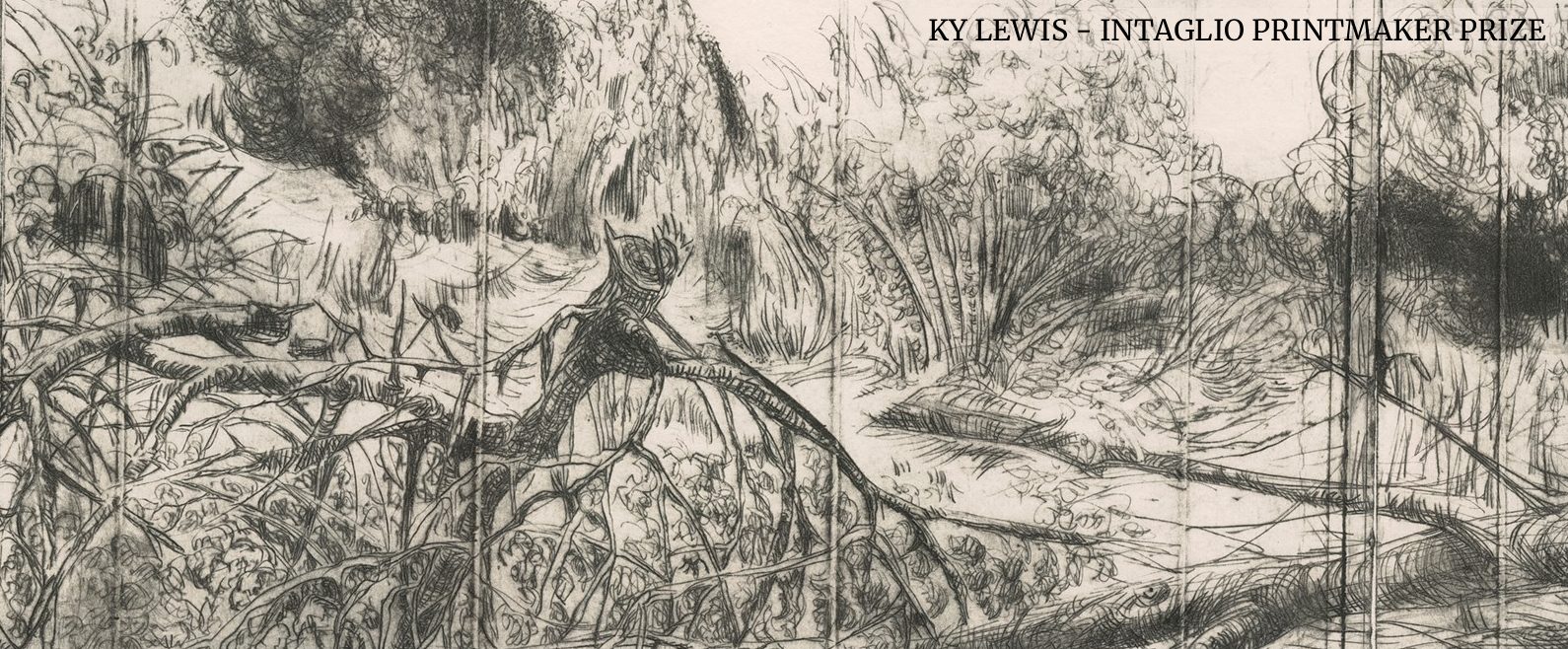
Intaglio Printmaker Prize Winner: Ky Lewis
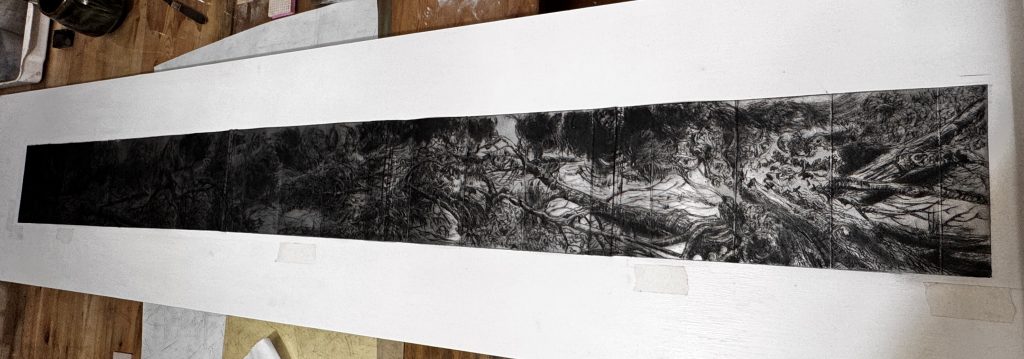
We are pleased to share that Ky Lewis was the recipient of our prize at this year’s International Original Print Exhibition at the Bankside Gallery. Our team were struck by the unusual length of her print ‘The Oak Tree Massacre.’ We also loved how Ky used tetrapak to create this drypoint piece, showing how an accessible, everyday material can be turned into a striking piece of art. Read on as we catch up with Ky, and discover more about how she creates her works.
'The Oak Tree Massacre' by Ky Lewis

‘The Oak Tree Massacre’
2025
Edition 15
Drypoint Print
1420 x 150 mm
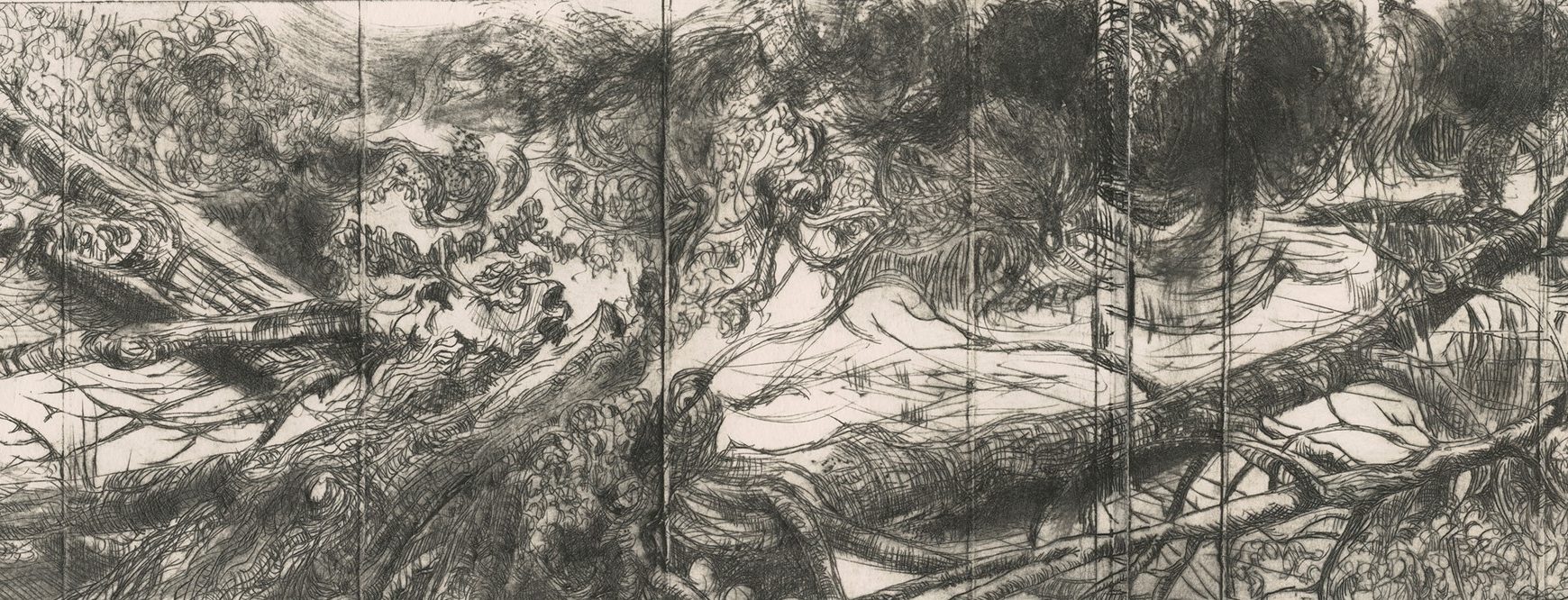
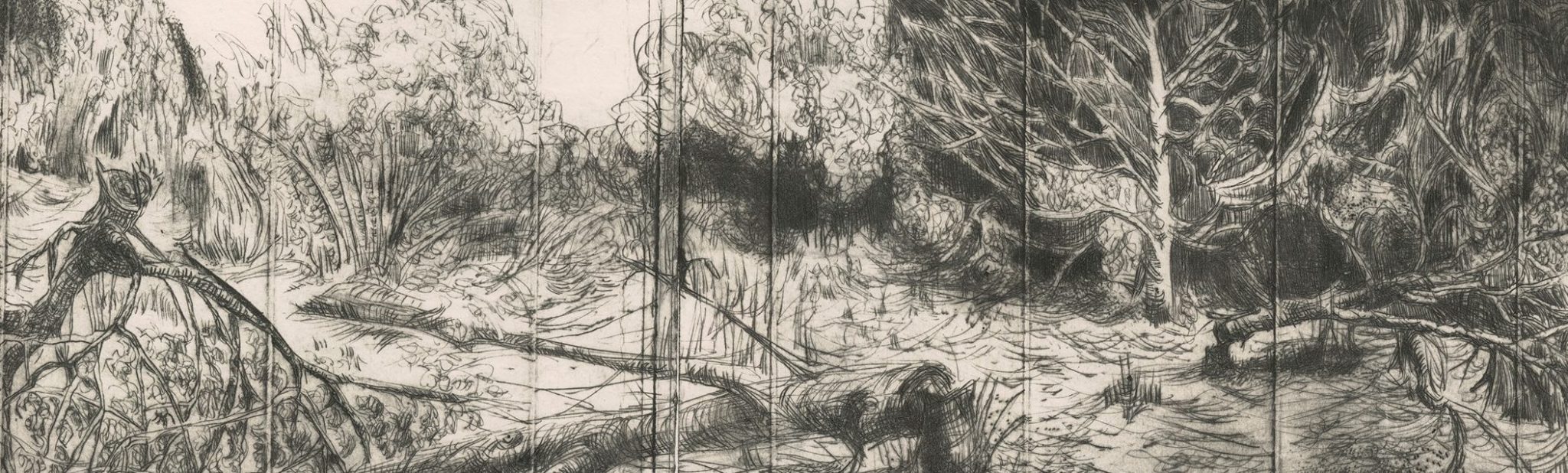
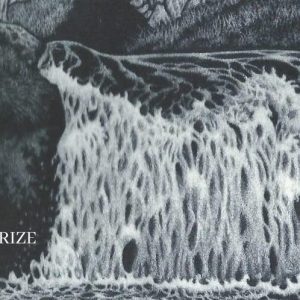
Detailed images of ‘The Oak Tree Massacre’
Please could you tell us a bit more about the inspiration behind the work?
The work is, in a way a memorial, a document amongst many others that I have made to portray the brutal and senseless destruction of 131 generational self-seeded oaks in Cator Park South London back in June of 2023. I had a call from a friend who works for the local parks charity which look after some of the open metropolitan land and I made my way there to document the crime scene. I also work using pinhole photography to record what I see and once entering the site the devastation was clear, the emotion from those present very high, it was truly appalling to see so many beautiful and mature 20-25 year old oaks prostrate, tangled and splayed in circles away from the remaining stumps-the silence was deafening. I made many photographs and while the camera was making long exposures I did small sketches as notes not thinking at the time that this would consume me so much but it was a powerful and moving sight. I have since made many small prints and drawings and printed my pinhole photos.
“The Oak Tree Massacre” was important for me to do, it felt like another cathartic step in the portrayal of this event, using drypoint seemed appropriate, the visceral mark making perfect for the angst and using the substrate of Tetrapak important because of the sustainability aspect. If I can save a tree by recycling either substrates or using offcuts of paper to print then that makes me happy. I had a large amount of paper offcuts from another project and the format was crying out to me for a detailed piece on the tree felling. The length of course was a challenge, after joining multiple Tetrapaks and getting thoroughly absorbed with the drawing process using drypoint the plate of course had to be inked, wiped and printed, I only have a small Polymetaal HS35 press meant for A3 size images so after some initial interesting attempts at printing on a small bed in sections I decided to head to a community printers just to get a proof to see if it was worth continuing-this proved just as problematic even on a massive press, the print being almost 1.5 metres long was going to be challenging but my mind was in overdrive and I started to think of homemade solutions, coming up with a complete reworking of my existing press and the potential for expansion. Subsequently after some trials with varying blankets I was able to stay in my studio and print this extremely long thin piece on my own press. I still feel as though there is more to do with this subject and the experimenting will continue.
What made you get into printmaking?
I first started printmaking at school, I had the most brilliant art teacher who introduced Lino very early on. I continued working in relief methods and started once at College/Uni to try other processes. Working in relief continued, I concentrated on wood engraving at the time as I was taught by John Lawrence. I became an illustrator and used print as much as possible to respond to briefs, the action of cutting, engraving scratching into the surface was something which really captured my imagination. I would pour over books with prints of all descriptions and there was nothing quite like seeing a beautiful print and the impression you would get from a press. After having a break for family/work I became more interested in process based darkroom work of a more alternative and experimental nature. I was still making relief prints but I started to think about process more and experimenting with surface. Currently I feel using drypoint relates to the immediacy of the action, I can draw direct to plate be responsive and spontaneous with the mark making. I mostly work or at least start a print en plein air and continue in the studio if necessary. I believe if I had to draw trace and transfer I may find the print would get a little dead and so currently with this method I prefer to draw straight on and let the mark making be organic and fluid.
Tell us about your other works – are they similar or different? Do you tend to work within one technique?
The other works are not exactly the same proportions, at least not anything I have shared yet but the way I work is the same and the subject matter is currently trees, it probably will be for a while as I feel I have too much to say so this series is growing. The intent was to document the different treatments that our urban trees receive, we are all familiar with the heavily pollarded trees in London but some boroughs seem to enjoy reducing them to mere nubs of carbon and I am often horrified at the look of some to the point of capturing in print, drawings and small books. To counter this I will also sit in local parks and find those that have been allowed more free reign to spread with their canopies. I have been documenting street and park trees for a while both with large format pinhole and drawings and then working in intaglio, relief and alt photography. It is the drypoint that I am using the most, I am loving getting lost in the detail and also finding new ways to bring tone to the surface. The scale does vary depending on the subject.
I am currently working with intaglio but depending on what the image demands I would use other methods such as relief, or alternative photographic processes, there are many processes that I would like to get to use more frequently. I don’t want to be constrained by just doing one technique.
What would be on your ultimate Intaglio Printmaker wish list?
Such a tough question, I find standing in the shop I get pulled from all different corners, there are of course the essentials and if I was not recycling then I would love a range of plates in copper, zinc and steel and a stack of Awagami paper.
If you could own one artwork, what would it be?
Almost impossible to answer I have so many but I think, The Three Trees by Rembrandt for its quiet yet awe inspiring beauty- the light and line have stayed with me since I first saw it many years ago and I recently got to hold one of the prints at the V&A but then I’m not sure anyone should own something like that.
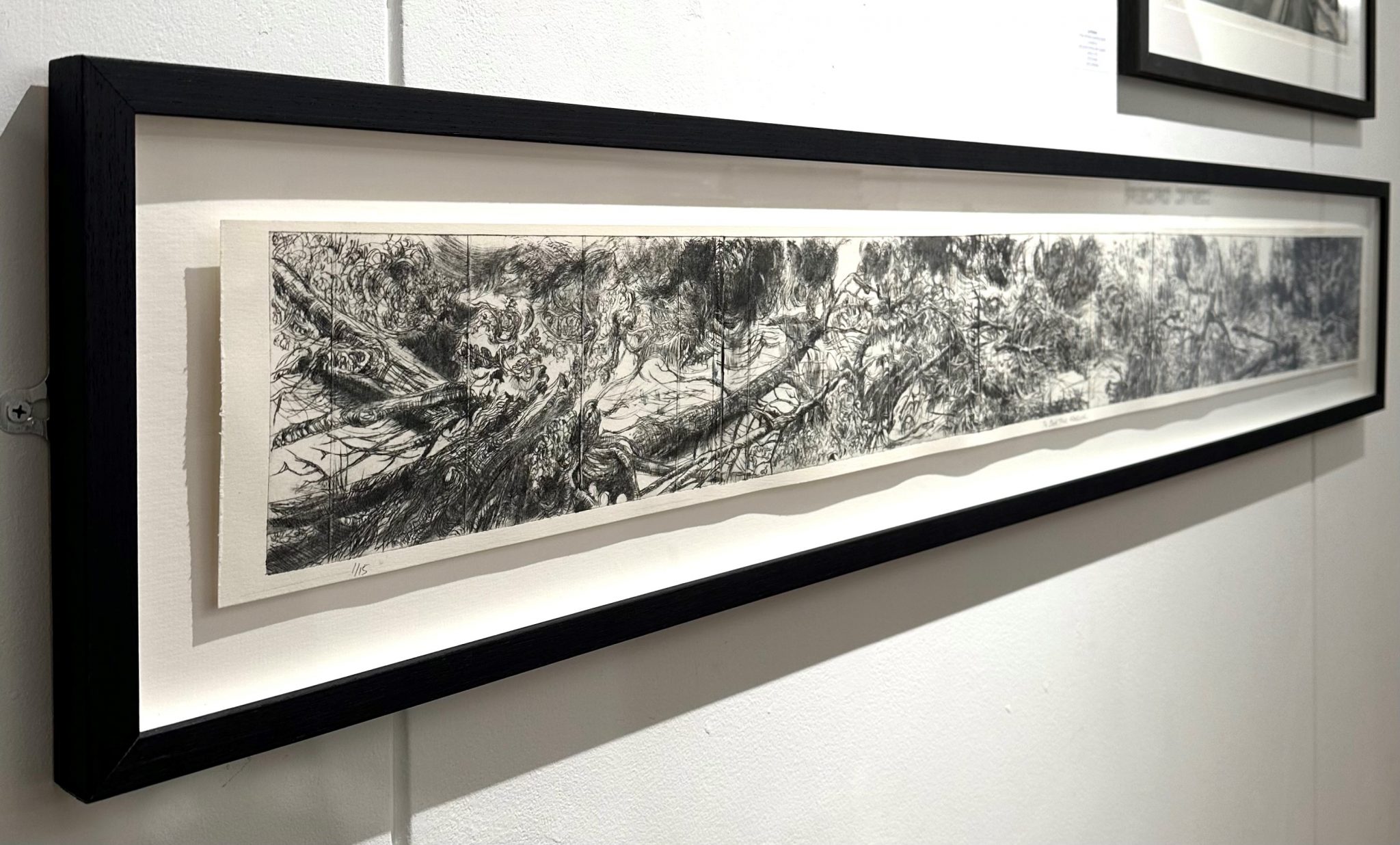
‘The Oak Tree Massacre’ framed print at the International Original Print Exhibition 2025, Bankside Gallery
Ky Lewis - About the artist
Ky is an artist working primarily with printmaking and alt photography employing traditional and unusual methods to create emotive prints with a site specific response in a range of media. Her interests are in the landscape both urban and rural settings and she is concerned about the impact made on the environment, currently focused on telling the stories of beleaguered urban trees. Sustainability plays a strong part in her practice, reusing and sourcing materials that would otherwise go to waste, she uses these within both aspects of her practice in the darkroom and also en plein air drypoint printmaking.
Her work has been published in books, magazines and private press publications Thames and Hudson-Experimental Photography,
Jill Enfield’s Guide To Photographic Alternative Processes, Shutter Hub-To The Sea; Analog Forever Magazine, Analog
Explorations At o B #3, Hanborough Books, New Arcadian Journal and many more.
Ky trained in graphics, illustration and printmaking. She worked as an illustrator and designer and then post family expanded her practice to include more photographic work and also curation. She shares her knowledge giving workshops in a wide variety of processes for the likes of Photo Oxford, The Photographers Gallery, The National Trust, Soundcamp and smaller art clubs.
She has been AIR at The National Trust and Soundcamp and has received awards from a number of photographic institutions and recently for her printmaking from Jacksons Art Prize and Intaglio Printmaker. Currently her work is on show at the Victoria and Albert Museum and is held in their print collection.
Congratulations on your win, Ky!
Follow along with Ky’s work and process:
Instagram:
Process images – the tetrapak plate on an extended bed