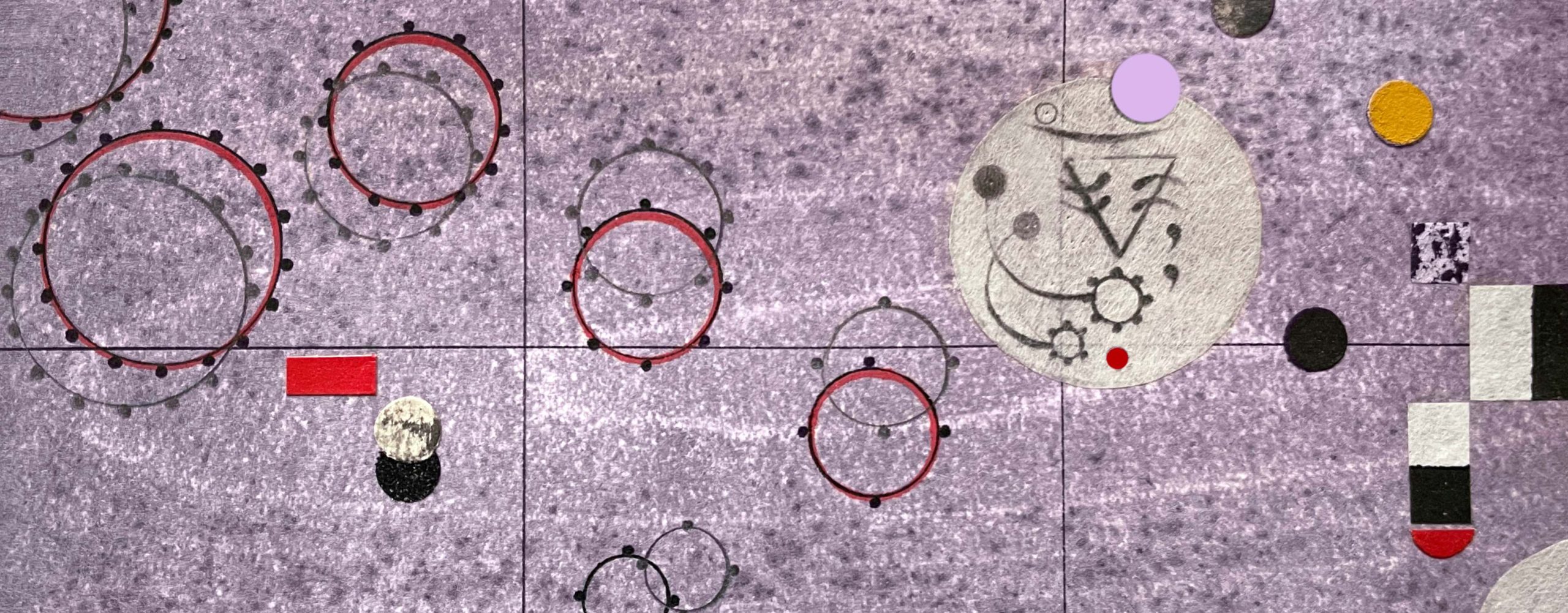
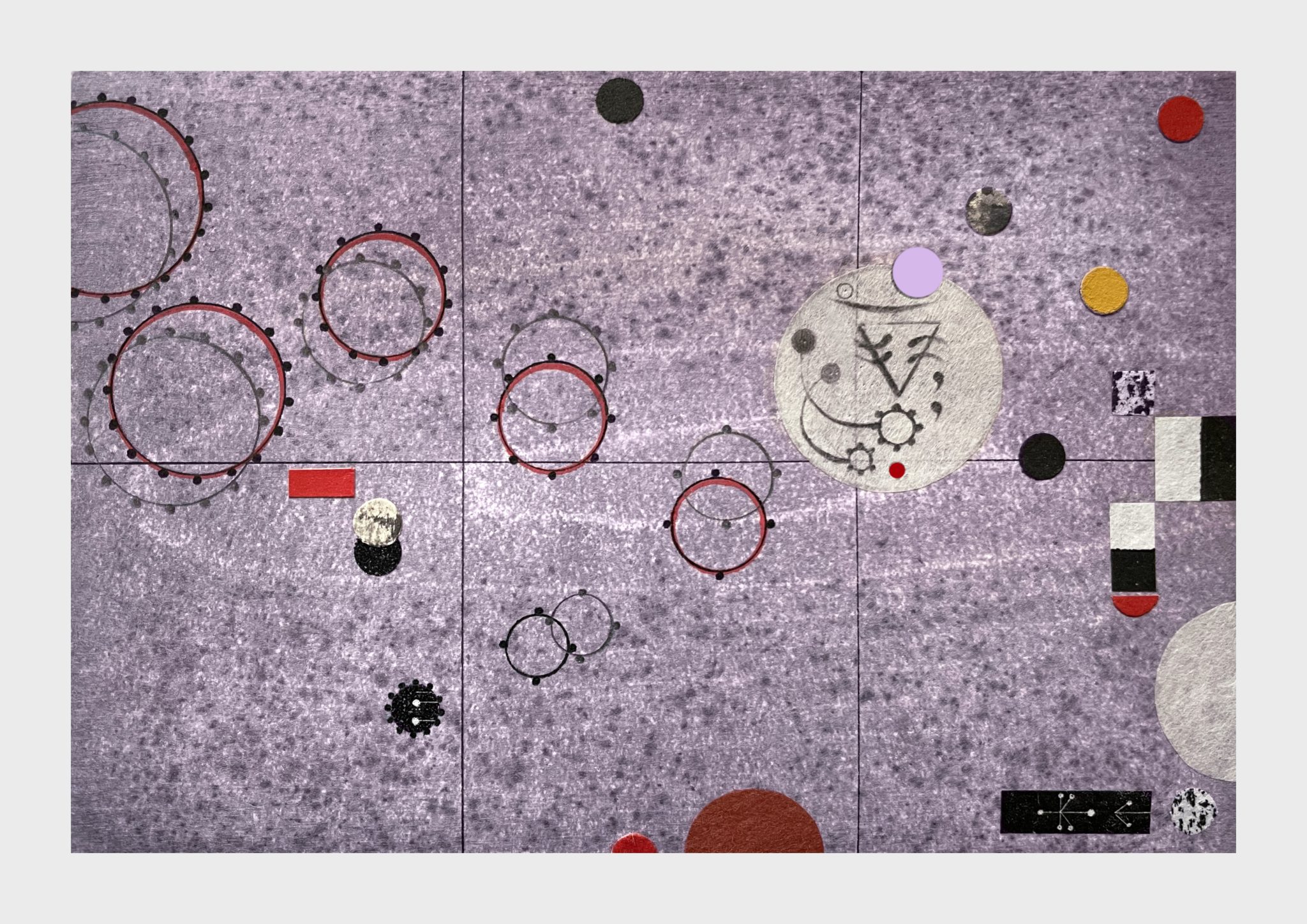
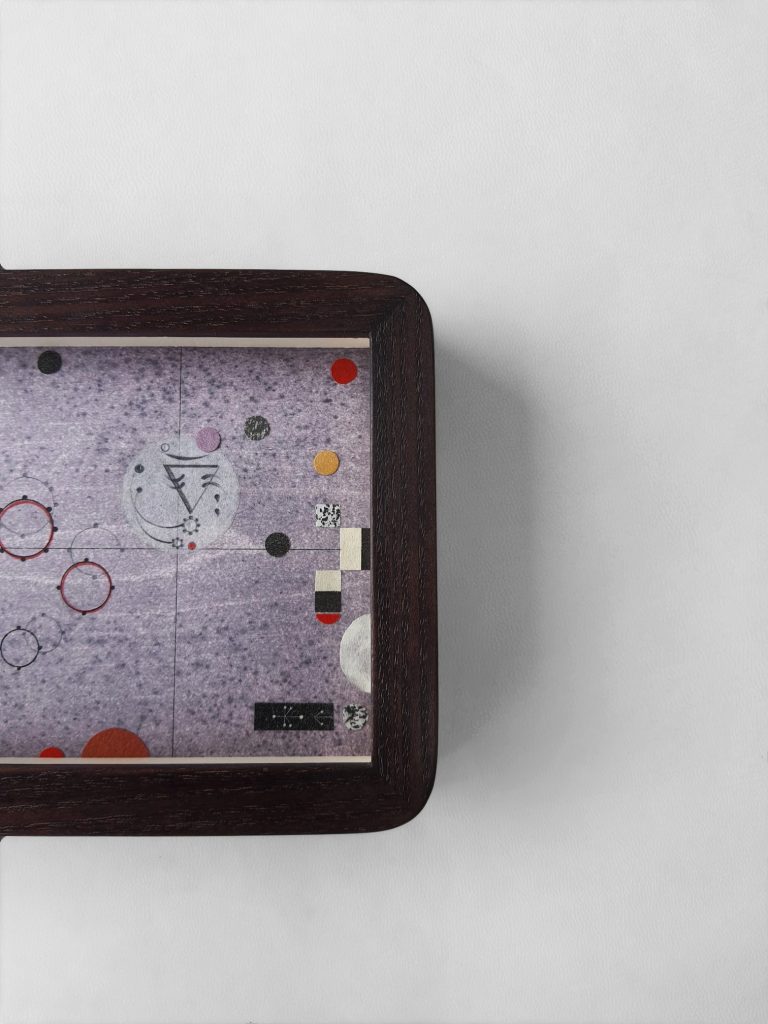
The Intaglio Printmaker prize was awarded to Inga Eičaitė at this year’s Small But Mighty exhibtion at the Bankside Gallery in London. Inga’s winning print, ’31 Atlas’ was awarded for its beautifully considered attention to detail and combination of Mokuhanga and intricate hand finished elements. We loved the delicate lilac tones balanced with bold, cryptic symbols, suggestive of a form of enigmatic cartography. We caught up with Inga to discover more about her inspiration and process.
Inga Eičaitė - 31 Atlas
31 Atlas
16 x 11cm
Hand Finished Mokuhanga on Shiramine Washi
Edition of 13
Please could you tell us a bit more about the inspiration behind the work?
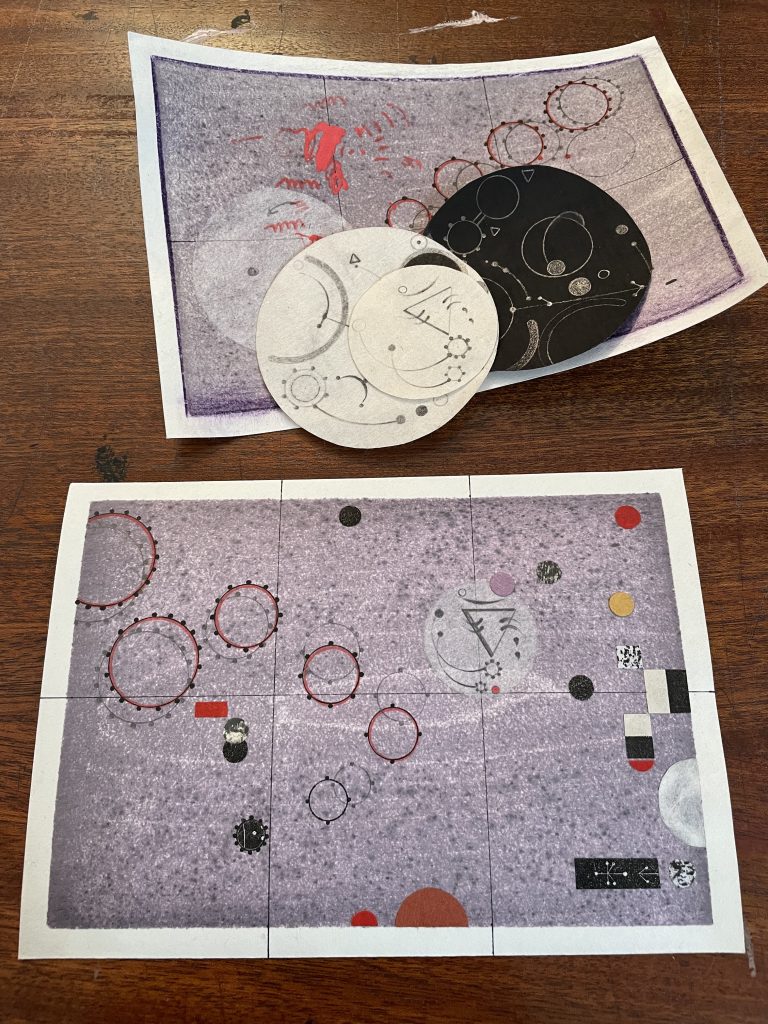
3I Atlas is a hand finished mokuhanga print, embellished with washi (Japanese paper), hanji (Korean paper) + etching collage bits and symbolic drawings.
3I/ATLAS, also known as C/2025 N1 and previously as A11pl3Z, is an interstellar ‘comet’ discovered on 1 July 2025 by the Asteroid Terrestrial-impact Last Alert System station. The comet followed an unbound, hyperbolic trajectory past the Sun, and passed by Earth at 1.8 AU, posing no threat.
It reminded me of 1973 Arthur C. Clarke’s sci-fi novel ‘Rendezvous with Rama’ . Very peculiar similarities – space object that looks like a comet, but doesn’t behave like one. In the book scientists get sent to board Rama and find a whole life infrastructure slowly waking up. However, they do not get to see Rama’s occupants as they need to leave before the ship fully charges on Sun’s energy and disappears into space. It’s not a handshake like in Carl Sagan ‘Contact’, more like a glance into.
What made you get into printmaking?
I have a BA in Graphic Design. My course had a strong introduction in fine arts: academic drawing, painting, watercolous and printmaking. I like working with my hands and figuring out compositions systematically. Printmaking offers a huge variety of textures and approaches. It’s a chemistry-like environment that offers me strange comfort.
Tell us about your other works – are they similar or different?
There are similarities in technique and topics that I approach, especially with the most recent work. I work with intaglio and traditional Japanese woodblock techniques, but collage elements bind them together. It becomes a more coherent conversation between the mediums. However, the BALANCE series stands on its own – it is strong, very minimal abstract line drawings of cosmos.
Do you tend to work within one technique?
No, it is a combo between traditional intaglio and Japanese woodblock – Mokuhanga. I do a lot of collaging and bookbinding too.
What would be on your ultimate Intaglio Printmaker wish list?
Ball bearing baren, chisels, wood for mokuhanga, washi and etching plates.
If you could own one artwork, what would it be?
Anything from Akira Kurosaki or Hidehiko Goto would be amazing.
Inga Eičaitė - About the artist
Inga Eičaitė is a contemporary printmaker dividing her practice between London and Vilnius, holding memberships with East London Printmakers (ELP) & People of Print (POP). Deeply influenced by movements of Bauhaus and Constructivism, Inga Eičaitė explores the dynamic intersection of science and lore in her work. Delves into the intricate relationship between these seemingly disparate realms, seeking to unearth the hidden connections. Through a process of deconstruction and reassembly, Inga dissects heavenly bodies and their linear structures, reimagining them within new systems. This transformative approach allows her to challenge traditional notions of form and function, encouraging viewers to contemplate alternative perspectives and question the boundaries of perceived reality through architectural forms. By integrating scientific principles and mythical elements, she investigates the interplay between the tangible and the abstract. Inga primarily works in a monochromatic palette, utilising black and white. This deliberate choice allows her to emphasise the contrast between light and shadow, form and void, and the presence and absence of elements. Usage of washi and hanji papers help bring that subtlety in the prints. She is delving deeper into the study of negative space, drawing inspiration from the minimalistic aesthetics and profound artistic philosophies found in minimal art. By exploring the significance of what is not explicitly depicted, she seeks to evoke a sense of introspection and contemplation within the viewer, prompting them to engage with the silence and emptiness that exists alongside the visible world.