We are pleased to share that Jo Okell was chosen as this year’s winner at the RE Original Prints Exhibition at the Bankside Gallery in London. Her monotype stood out for its unique approach to the technique. We loved the thoughtful balance of tactile layering and subtle colour choice, with a sensitivity to material that gave the work its quiet strength. By incorporating scrim, Jo created surfaces that feel both rustic and intimate, echoing the visual language of patchwork mending. We caught up with Jo to discover more about her inspiration and process.
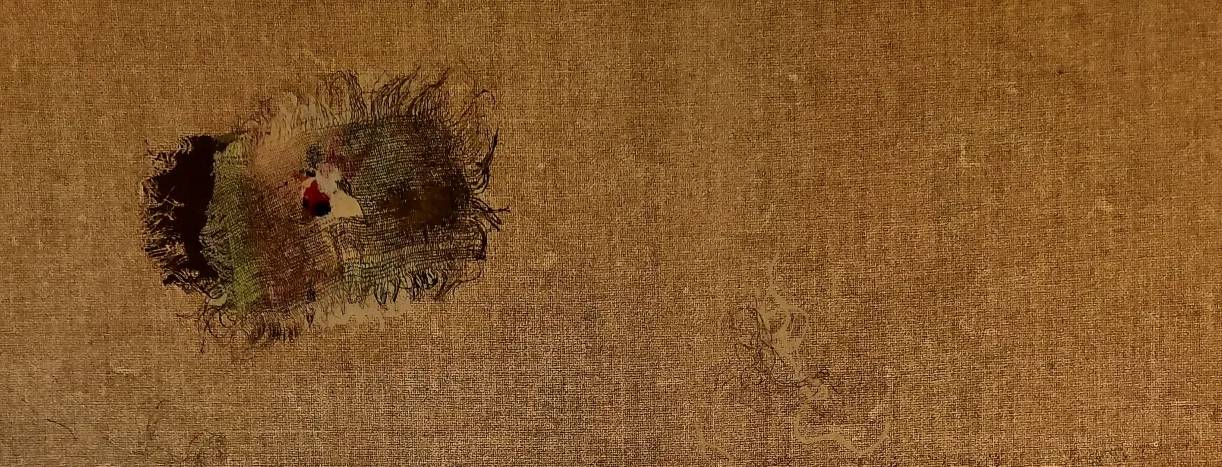
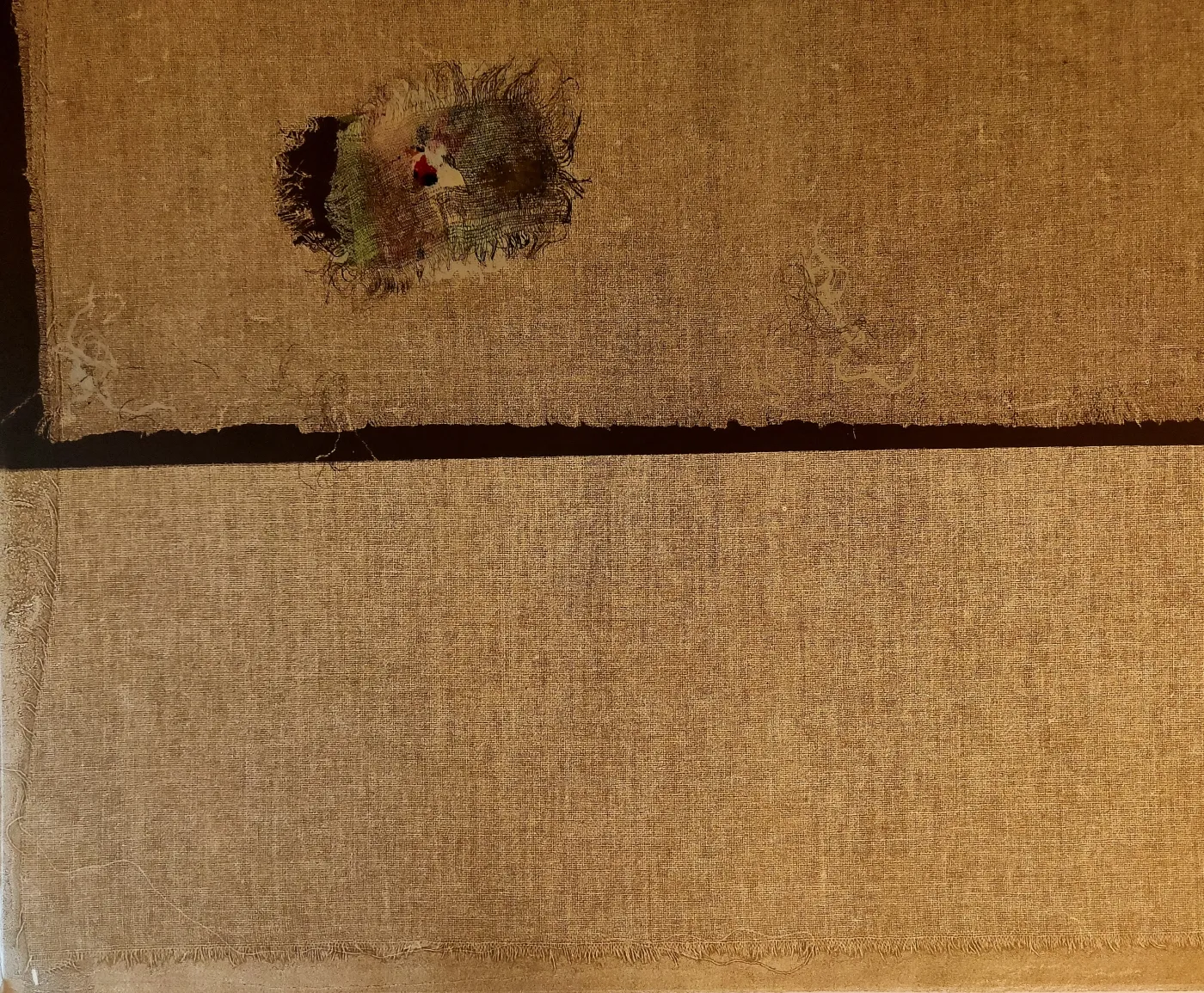
'Patch 05 ' by Josephine Okell ARE
Patch 05
Monotype
54 x 46 cm
Please could you tell us a bit more about the inspiration behind the work?
I was looking through a British Museum Book on African Textiles that brought me to the role of the patch. In the 19th century, Sudanese armies of the Mahdist state signalled contempt for worldly goods by deliberately wearing ragged patched tunics. These weren’t patched out of necessity or poverty – some how they looked deliberately ugly. A far cry from the aesthetic of the poor patchwork quilters of early America or the Japanese Boro technique of delicately sewing/patching indigo dyed rags or tattered clothes into worn fabric to make much needed blankets which are now regarded as works of art.
I’ve always been interested in material, both in making and mending. I remember my aunt, needle and thread in hand, going through her weekly wash and sewing on missing buttons, darning holes in socks and patching any torn clothes. All this before ironing. She was quick and confident and produced in me a lasting admiration for such skill. Years later, a French convent was closing down and were selling off their long white muslin net curtains. Those that had been darned were quarter of the price. To me the mended ones with their exquisite tiny woven patches were worth more than those that had remained fully intact.
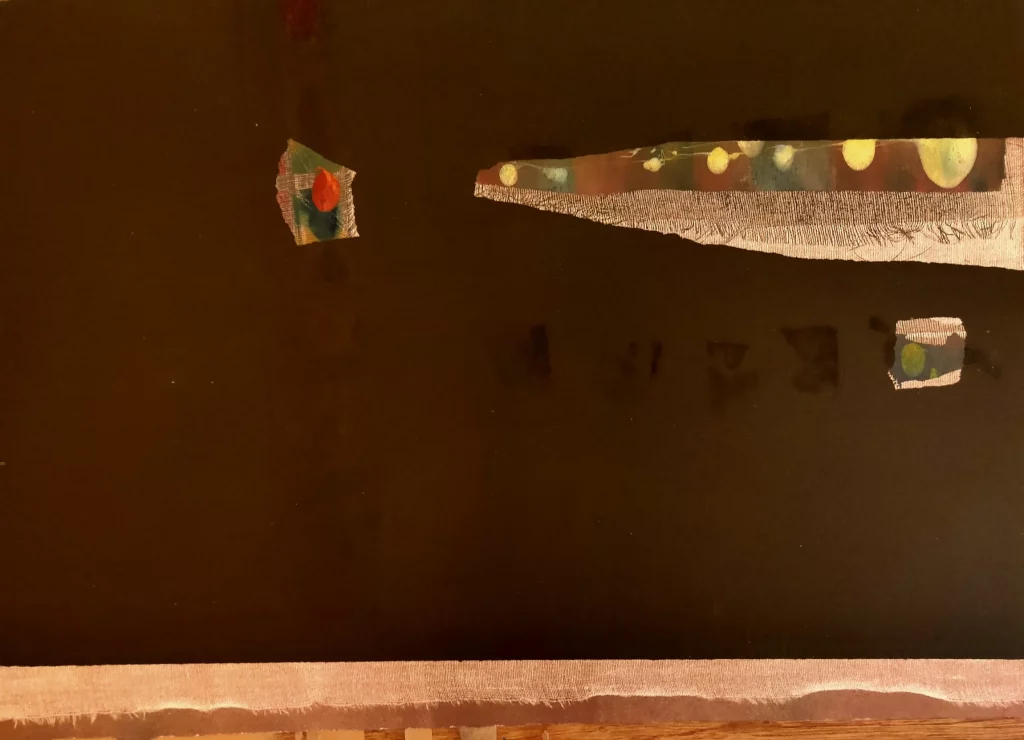
Patch 03
Monotype
54 x 46 cm
Using an intaglio press, I thickly rolled oil based inks onto perspex and started by printing different samples of canvas and other woven material. Initially, I layered up single patches on selected sample prints. They looked neither like patches or at all interesting. I put them aside and continued with my more abstract forms. It was later that I came to think about the shape as a tear, a rip that you could see into. (Often patches are placed underneath material to reinforce what is frayed). But now I was moving from patches to small worlds of potential abstract paintings. Little unrealised paintings which were still caught up in the threads and weaves of various canvases. This became a series of nine separate monotypes. I thought about calling them “the tear”, but in honour of the original inspiration I kept to” the patch”.
Jo Okell ARE - About the artist
Jo Okell works using abstract forms. Her prints are in series of monotypes linked by differing themes, borders, edges and layers. She works both directly on the steel bed of the offset press and on sheets of perspex printed on an etching press, adding and manipulating the form as she goes. Her interest lies in the relationship between layers of shape and the space they occupy.
Jo studied Fine Art at Central St Martins and then printmaking and artists books courses at Morley College. She has exhibited her work in the UK and France.